Ratio to Percentage: Complete Guide With Easy Examples
Master ratio to percentage conversions with simple formulas, real-world examples, multi-term breakdowns, and decimal handling techniques.
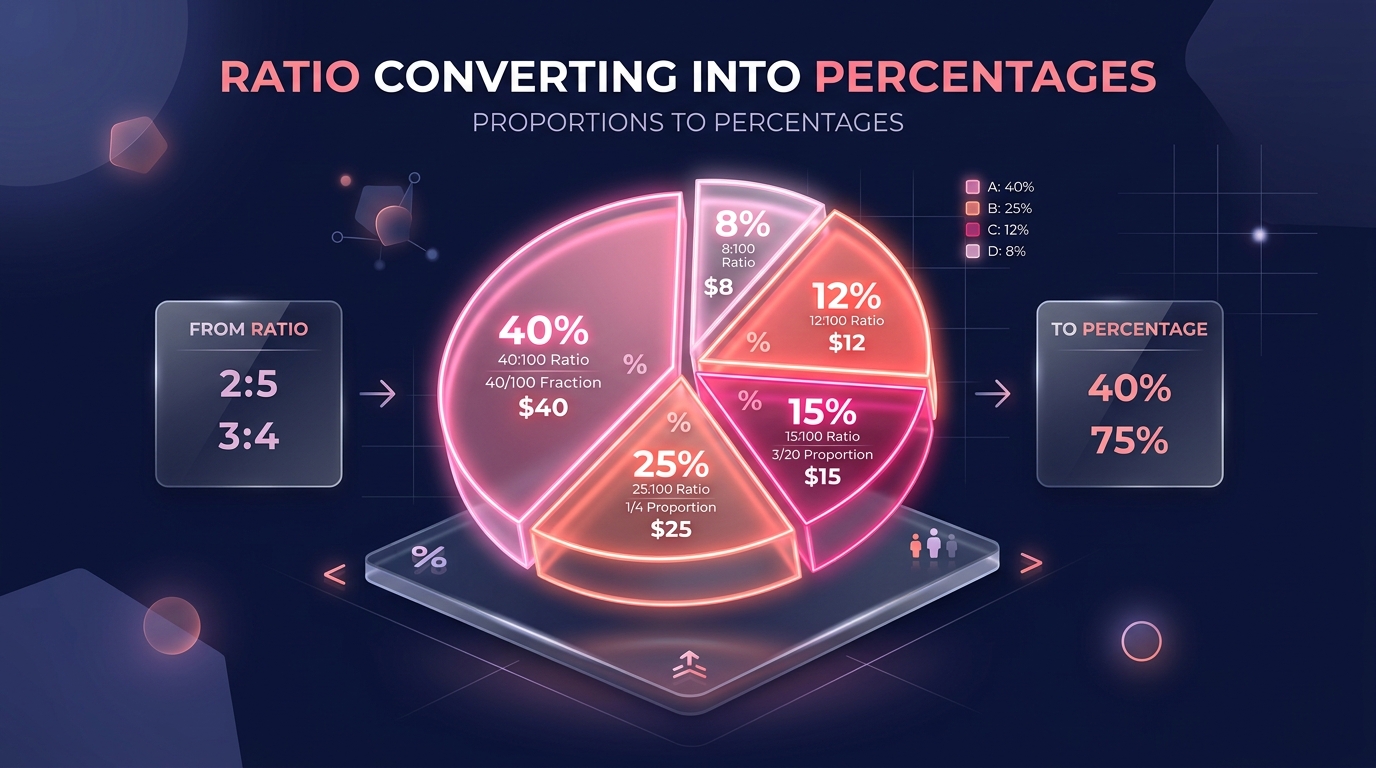
Ratios and percentages often describe the same idea. A class with 2 girls for every 3 boys is also 40% girls. Knowing how to convert a ratio to a percentage makes numbers easier to read and compare. This guide walks you through simple conversions, handy formulas, and tricky decimal cases. You’ll also learn which mistakes quietly produce the wrong answer.
What Is the Relationship Between a Ratio and a Percentage?
A ratio compares parts to each other. A percentage compares one part to a whole of 100. Both describe how something is shared. They just speak different languages.
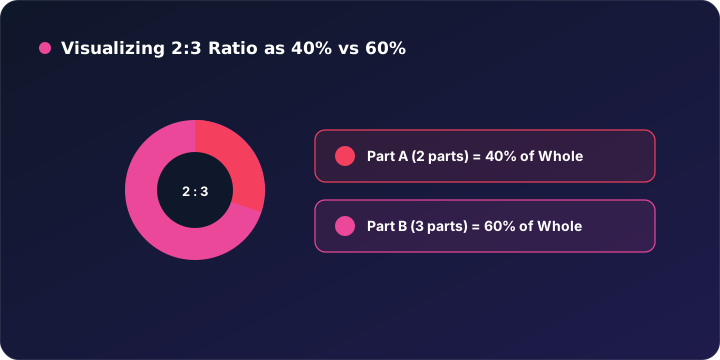
To connect them, you need the total. A ratio of 2:3 has 5 parts in all. The first part is 2 out of 5. As a percentage, that’s 40%. This ratio percentage relationship is the key to every conversion.
How Do You Convert a Simple Ratio Into a Percentage?
Start by adding the ratio terms. For 1:3, that’s 4 parts. Then divide each term by the total. Finally, multiply by 100.
So 1 ÷ 4 = 0.25, which is 25%. And 3 ÷ 4 = 0.75, which is 75%. That’s how you convert ratio into percentage step by step. The table below shows common results.
| Ratio | First Part | Second Part |
|---|---|---|
| 1:1 | 50% | 50% |
| 1:3 | 25% | 75% |
| 1:4 | 20% | 80% |
| 2:3 | 40% | 60% |
| 3:7 | 30% | 70% |
How Can You Calculate the Percentage Represented by One Ratio Part?
Divide 100 by the total number of parts. For a ratio with 5 parts, each part equals 20%. For 8 parts, each part equals 12.5%.
Then multiply by the term you need. In a 3:5 ratio, there are 8 parts. The first term is 3 × 12.5% = 37.5%. This shortcut helps you calculate percentage from ratio parts quickly.
Using One Part to Check a Ratio Percentage
Your percentages should always add up to 100%. In the 3:5 example, 37.5% + 62.5% = 100%. If your total misses, recheck the part size. This quick test helps you check ratio percentage calculation results.
What Formula Can You Use for Ratio-to-Percentage Conversion?
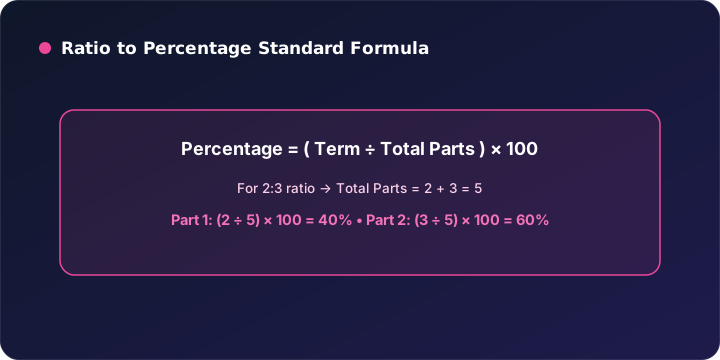
Here’s the core ratio to percentage formula. Percentage equals the ratio term divided by the sum of all terms, times 100. It works for any ratio with any number of terms.
Take a 2 to 3 ratio to percentage example. The sum is 5. The first term gives 2 ÷ 5 × 100 = 40%. The second gives 3 ÷ 5 × 100 = 60%. Memorize this, and most problems become simple.
How Do You Convert Ratios With More Than Two Terms?
Use the same formula. Just add every term first. A ratio of 1:2:5 has 8 parts in total.
Then convert each term. The first is 1 ÷ 8 = 12.5%. The second is 2 ÷ 8 = 25%. The third is 5 ÷ 8 = 62.5%. Together, they make 100%. This is how you convert ratios with three terms to percentages cleanly.
How Can Percentages Help You Interpret a Ratio in Real Situations?
Percentages make ratios easier to picture. A school might report 12 girls and 18 boys in a class. That’s a 2:3 ratio. But saying “40% girls” feels clearer to most readers.
Businesses use this all the time. Case study: Picture a small bakery that sells cookies to muffins in a 3:1 ratio. The owner converts it and sees cookies make up 75% of sales. That insight helps her plan her baking schedule.
Reading Ratio Percentages in Reports and Charts
News stories and pie charts often use percentages. Behind each slice is a ratio. When you see 30% and 70%, think 3:7. This habit strengthens your ratio interpretation skills every day.
What Is the Difference Between a Ratio and a Percentage Value?
A ratio shows a relationship between parts. It has no fixed total. A percentage always uses 100 as its base. So a ratio stays flexible, while a percentage is standardized.
There’s another subtle difference. Some problems ask for one term as a percentage of the other, not of the total. In 2:3, the first term is about 66.67% of the second. Read carefully to know which percentage value the question wants.
How Should You Handle Ratios That Produce Repeating or Decimal Percentages?
Some ratios don’t divide neatly. A 1:2 ratio gives 33.333…% and 66.666…%. Round to a sensible place, like 33.33% and 66.67%. These still add to 100%.
Three-way splits can cause rounding gaps. A 1:1:1 ratio gives 33.3% each, which adds to 99.9%. That’s normal. You can adjust one value slightly or note that totals may not equal 100% because of rounding. Either way, stay consistent.
What Common Conversion Errors Can Produce the Wrong Percentage?
The most common error is dividing by the wrong number. Some people turn 2:3 into 2 ÷ 3. That gives 66.67% instead of 40%. Always divide by the total when you want a share of the whole.
Other mistakes include forgetting to multiply by 100 or swapping the terms. Also watch for ratios with more than two parts. Missing one term in the sum throws off every result. Slow down and check that your percentages total 100%.
Conclusion
Converting a ratio to a percentage is simple once you know the total. Add the terms, divide each one by the sum, and multiply by 100. Round carefully when decimals repeat, and always check the total. Read each question closely to see which comparison it needs. With these steps, you can turn a ratio into a percentage accurately every time.