Common Mixing Ratios for DIY Projects: Paint, Concrete, Fuel
Learn how to calculate and scale mixing ratios for DIY projects including concrete proportions, two-stroke fuel mixtures, and paint epoxy ratios.
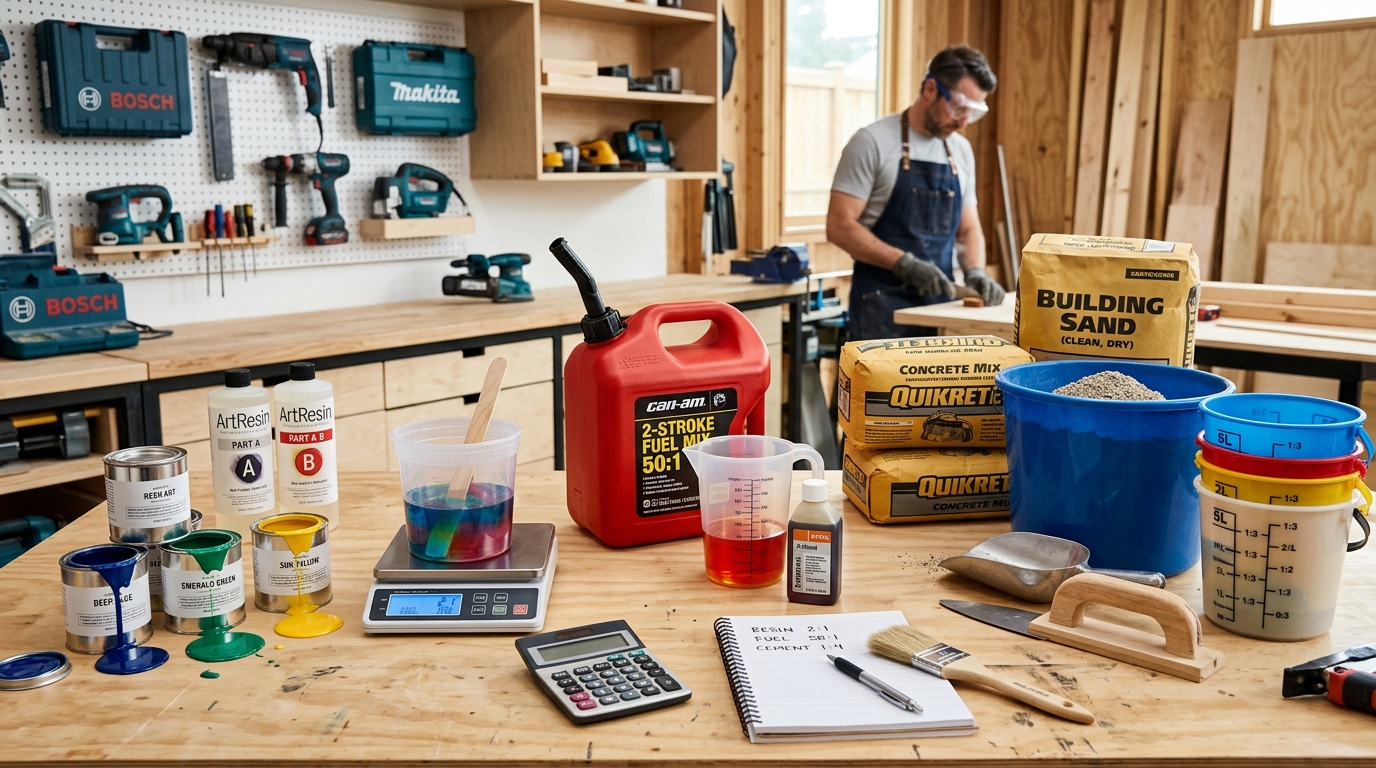
DIY projects often come with a set of numbers on the label. Maybe it’s 1:2:3 for concrete or 50:1 for fuel. Those numbers matter a lot. Get them wrong, and your concrete cracks or your engine suffers. This guide explains how to use mixing ratios for common home projects. You’ll learn to read them, scale them, and double-check before you start.
What Does a Mixing Ratio Tell You About a DIY Mixture?
A mixing ratio shows how much of each material goes into a mixture. A ratio of 1:2 means one part of the first material for every two parts of the second. The parts can be cups, buckets, or gallons.
What matters is keeping the parts equal in size. Use the same container for every part. That’s the heart of proportional mixing. The ratio doesn’t tell you batch size. It only tells you the balance.
How Do You Calculate the Amount of Each Material From a Mixing Ratio?
Add the ratio terms to find total parts. Then divide your batch size by that number. Finally, multiply by each term.
Say you need 12 buckets of concrete mix at 1:2:3. That’s 6 parts, so each part is 2 buckets. You’ll need 2 buckets of cement, 4 of sand, and 6 of gravel. This method helps you calculate material quantities from a ratio for any project.
Reading the Order of a Mixing Ratio
The order always matches the label. On concrete, it’s usually cement, sand, then gravel. On fuel, it’s usually gasoline to oil. Knowing how to read a mixing ratio prevents costly swaps.
How Can Paint Ratios Help You Combine Different Materials Correctly?
Many paint products use ratios. Two-part epoxies often mix at 1:1 or 2:1 by volume. Some paints need thinning, usually listed as a small percentage. Tinting may follow a ratio too.
Always follow the manufacturer’s label. Each product is different. Measure both parts in marked cups for accuracy. A careful paint mixing ratio gives even color, proper drying, and a strong finish.
How Are Ratios Used When Mixing Concrete Components?
Concrete combines cement, sand, and gravel. A common general-purpose mix is 1:2:3 by volume. Some projects use 1:2:4 for a slightly leaner mix. Water is added gradually until the mix feels workable.
Too much water weakens concrete. Too little makes it hard to spread. Add water slowly and mix well. Case study: Picture a homeowner pouring a small shed pad. He measures with the same bucket for every part. His slab sets evenly with no weak spots. Remember to wear gloves and eye protection, since wet concrete can irritate skin.
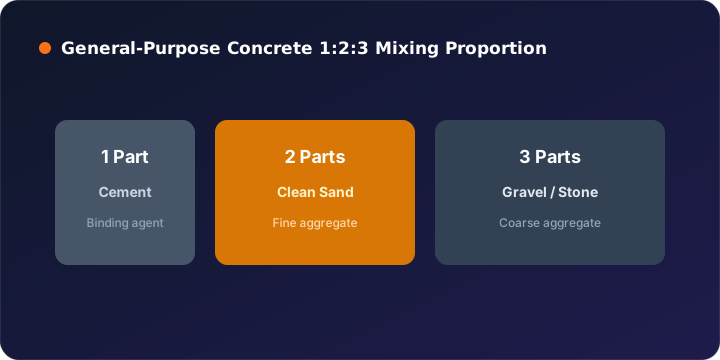
How Do Fuel Mixing Ratios Express Different Quantities?
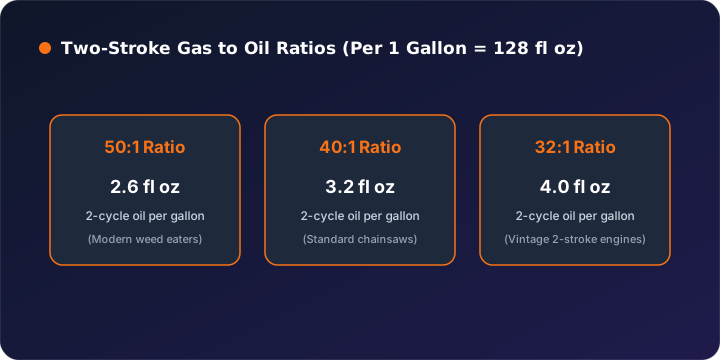
Two-stroke engines, like many leaf blowers and trimmers, need oil mixed into gasoline. A 50:1 ratio means 50 parts gas to 1 part oil. Other engines use 40:1 or 32:1. Check your owner’s manual.
The table below shows oil amounts for common ratios.
| Ratio | Oil per 1 Gallon | Oil per 2.5 Gallons |
|---|---|---|
| 50:1 | About 2.6 fl oz | 6.4 fl oz |
| 40:1 | 3.2 fl oz | 8.0 fl oz |
| 32:1 | 4.0 fl oz | 10.0 fl oz |
Since 1 gallon equals 128 fluid ounces, you divide 128 by the ratio number.
How Can You Scale a DIY Mixture Without Changing Its Proportions?
Multiply every part by the same number. Want double the concrete? Double each material. Want half? Halve each one. This keeps the mixture consistency you need.
For small batches, use smaller containers. A cup works just as well as a bucket, as long as you use it for every part. That’s how you scale a mixing ratio for tiny repair jobs.
Using a Scale Factor for Larger DIY Batches
Divide your new batch size by the original. That’s your mixture scale factor. Multiply every material by it. This simple step keeps big pours as reliable as small ones.
What Can Go Wrong When a Mixing Ratio Is Misread?
Reversing a ratio is a serious mistake. Reading 50:1 as 1:50 would put far too much oil in fuel. That can foul spark plugs and cause smoke. The wrong amount of hardener in epoxy may stop it from curing.
Another issue is mixing by weight when the label means volume. Sand and cement weigh differently. So a weight-based mix may not match a volume ratio. Always check which one the label uses.
How Should You Deal With Different Units in a Mixing Ratio?
Convert everything to one unit before measuring. Fuel ratios are easier in fluid ounces. For 2.5 gallons, that’s 320 fluid ounces. At 50:1, you need 320 ÷ 50 = 6.4 fluid ounces of oil.
For paint, labels may mix ounces and cups. Remember that 1 cup equals 8 fluid ounces. Converting first prevents confusion and helps you convert mixing ratios into amounts reliably.
What Should You Check Before Applying a Calculated DIY Mixing Ratio?
Reread the product label. Confirm the ratio, the order, and whether it’s by weight or volume. Check the working time, since some mixtures harden fast.
Then do a small test batch if possible. Look at color, texture, and flow. Gather safety gear, including gloves and eye protection. Work in a ventilated area with fuel or strong paints. These checks help you check a mixing ratio calculation before it matters.
Doing a Quick Test Batch First
A small sample reveals problems early. If paint looks streaky or concrete feels crumbly, adjust before the full batch. This habit protects your time, money, and mixing accuracy.
Conclusion
Mixing ratios keep DIY projects strong and safe. Add the parts, find one part, and multiply for each material. Use the same container for every part, and convert units before measuring. Always follow the manufacturer’s label and test a small batch first. With these steps, you can use ratios for material mixtures in paint, concrete, and fuel with confidence.